Artivation #1: Zen for Internet
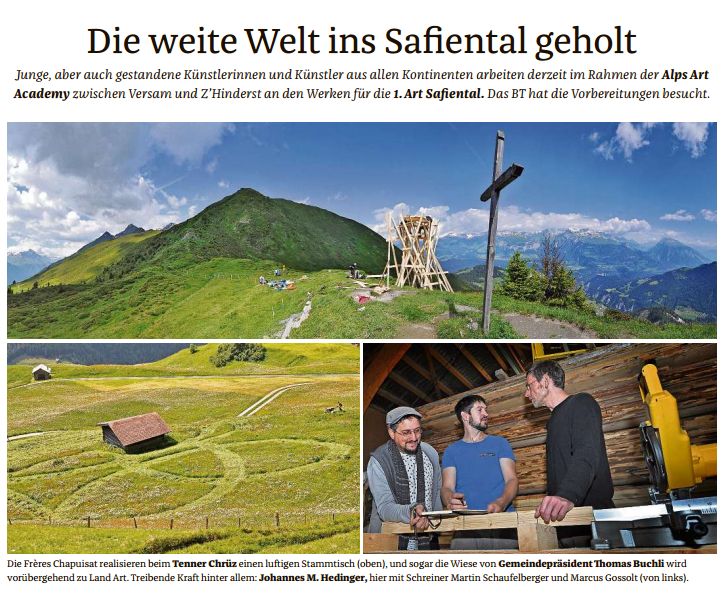
Over the next four years, within the framework of the research project SNSF Activating Fluxus, you may expect to encounter “Artivations,” that is, artistic activations – adaptations, (re)enactments, (re)interpretations, and new productions. They will be done in the spirit of Fluxus, the avant-garde movement that changed, in the 1960s and 70s, how art is done and what it means to create an artwork. They will be initiated, curated, and, at times, created and executed by the Swiss art collective Com&Com, founded in 1997 by Marcus Gossolt and Johannes M. Hedinger.
In 2014, invited to contribute to an exhibition Revision: Zen for Film at Bard Graduate Center Gallery New York (September 18, 2015 – February 21, 2016), they created a work titled Zen for Internet.

Using the iconography of the internet and computer, the work features an endlessly rotating “loading wheel” on a white background. Typically, the “loading wheel” would be a temporary, in-between state before seeing the fully loaded image. Zen for Internet, however, indefinitely freezes the in-between-ness; the viewers never see the desired image.
The work refers directly to Nam June Paik’s iconic work Zen for Film (1962-64). Fifty years after Paik’s intervention, the Swiss artists decided to continue, in the digital world, the themes inherent to Paik’s work such as Zen, silence, nothingness, boredom, trace, chance and materiality.
The artists conceived of Zen for Internet existing in multiple iterations in a variety of media: as a website (www.zen-net.org), a thirty-minute video (accessible on YouTube and below), a painting, and as various types of merchandise including t-shirts, pillows and tote bags, as seen on the image down below. In addition to appropriating the themes of duration and nothingness from Paik’s Zen for Film, Zen for Internet speaks to the inherent mutability of a Fluxus work and to the changeability of its concept. Rather than existing in a single instantiation, Zen for Internet work can exist in a variety of formats, just as Zen for Film existed in an assortment of contexts, all of which were still “authentically” the work.
But in the context of the project, the relevant questions raised by this work are: What does it mean to activate a historical, canonical, and seemingly well-known work (on this topic, see Hölling, Revisions: Zen for Film, 2015) in the digital age and for the post-digital audience? How can a work be revived, or revitalized, in a world which is different from how it was back in the 1960s? Can intermediality be thought of on a larger timescale to involve intergenerational shifts, adaptations and borrowings? What can creativity, artistic interpretation, and appropriation bring into the picture of conservation? And, last but not least, how to preserve boredom without being bored, and boring?

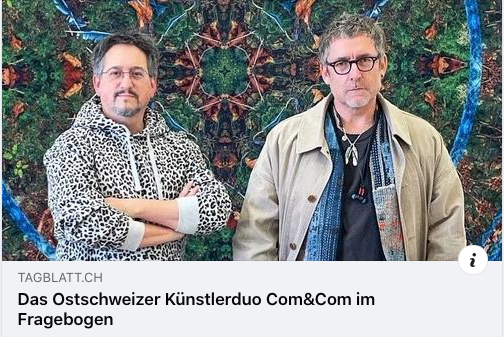
Questionnaire Tagblatt
What Com&Com is currently learning and for what they are looking looking forward – questionnaire at Tagblatt
EST. 1997
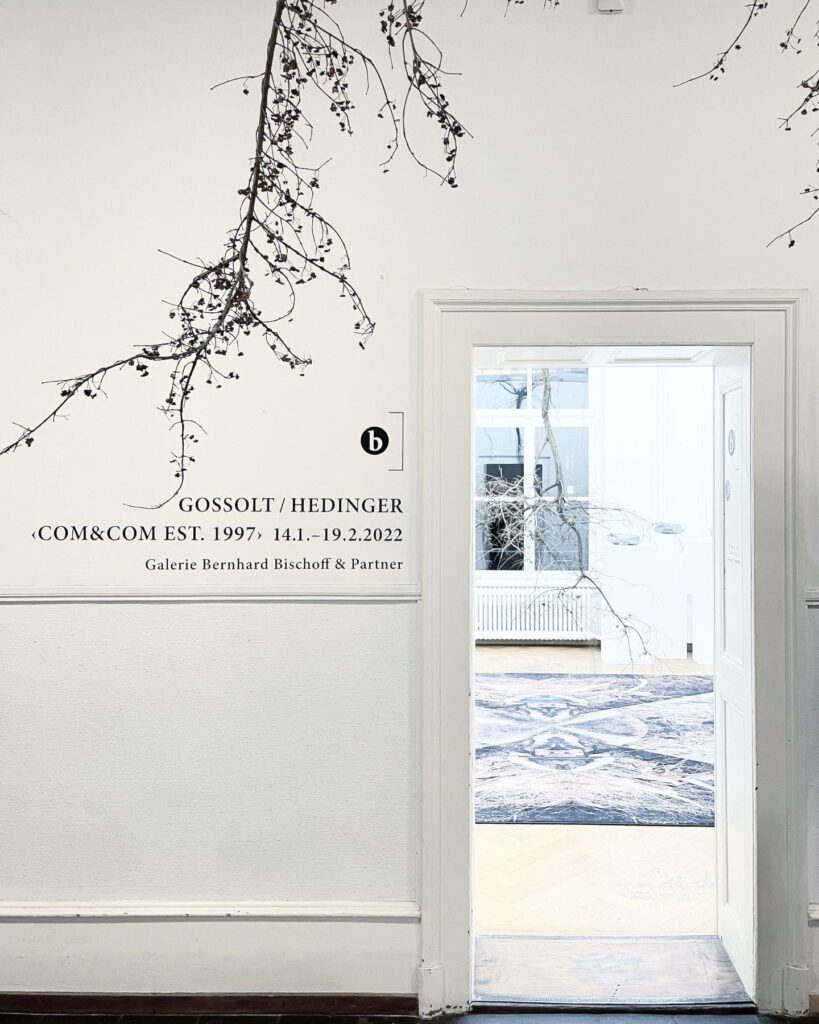
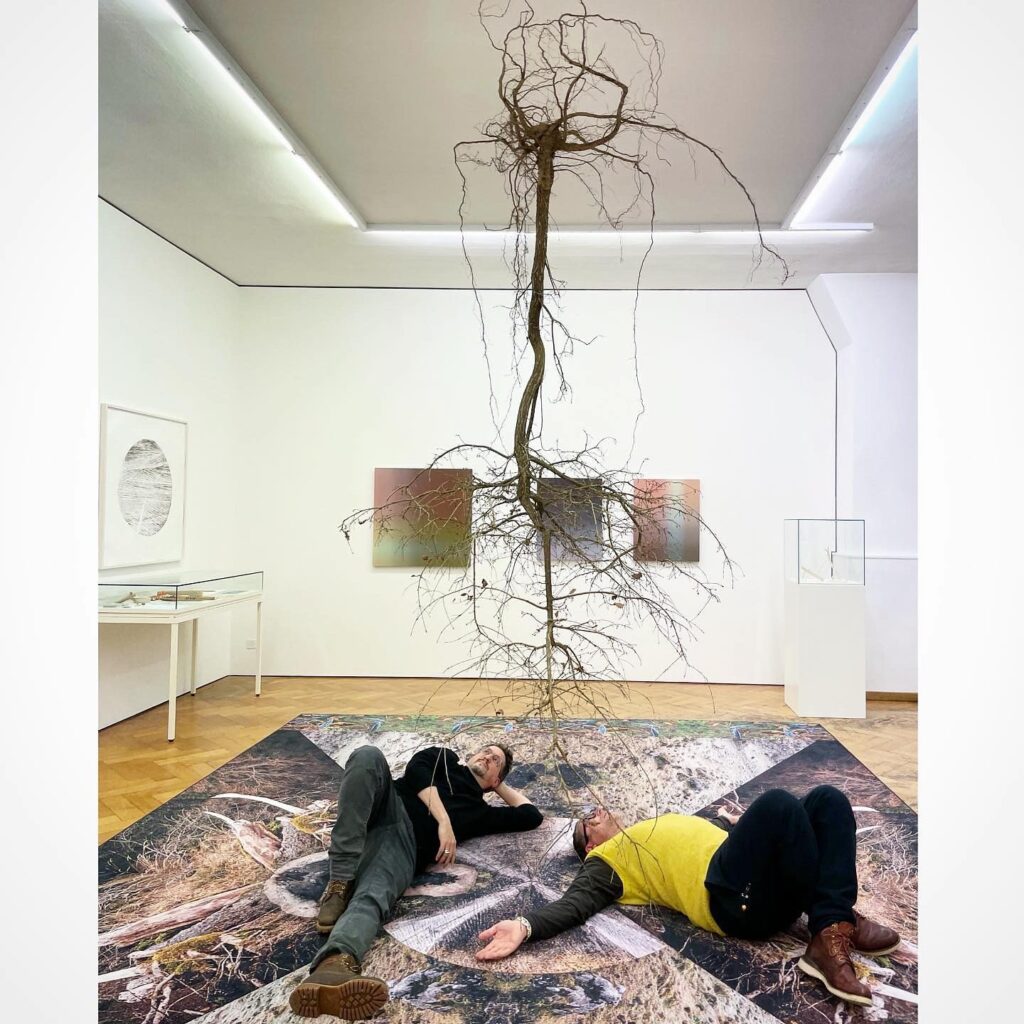
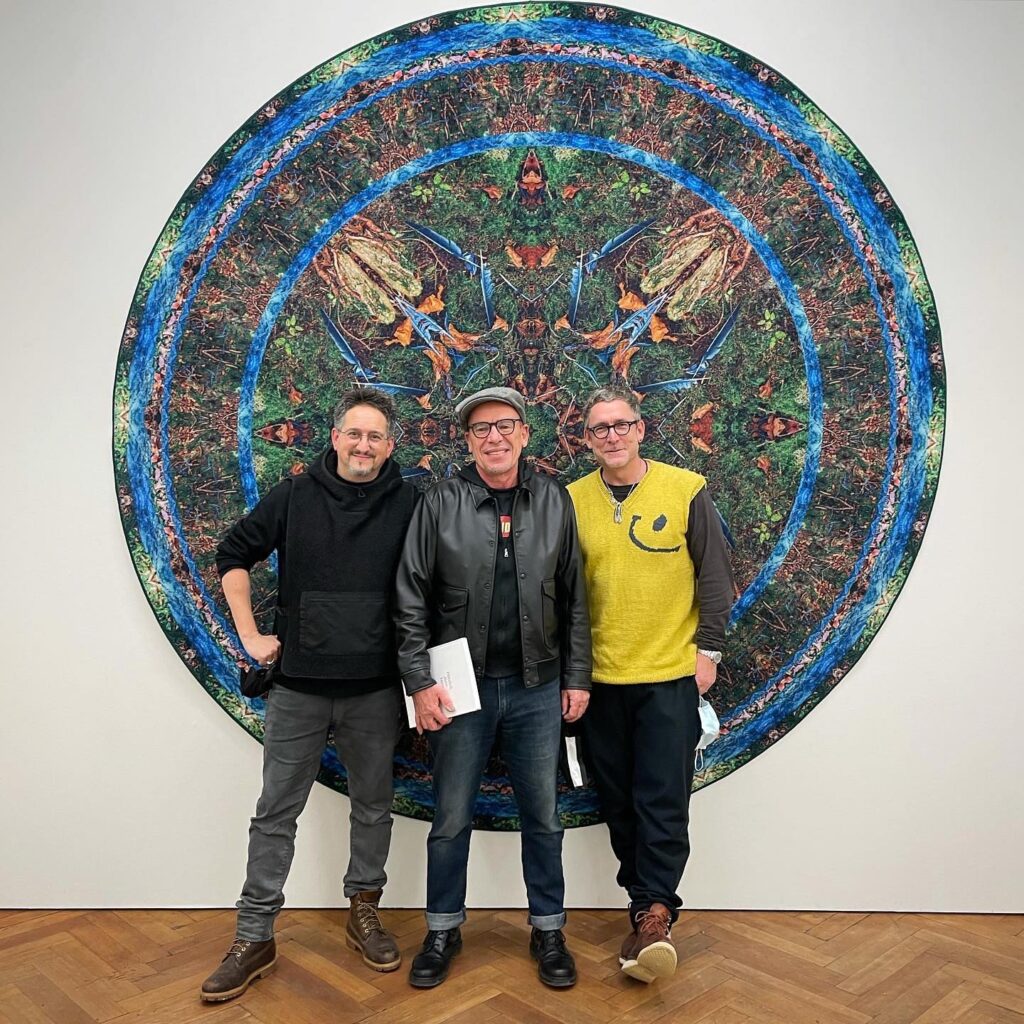
25 year Anniversary Show at Bernhard Bischoff Gallery Bern. 50 works from 25 years + 2 new work cycles. Trees in collaboration with Diebold/Zgraggen, carpets with Martin Leuthold. – on show until Feb 19. – Work/Price list
25 Years Anniversary
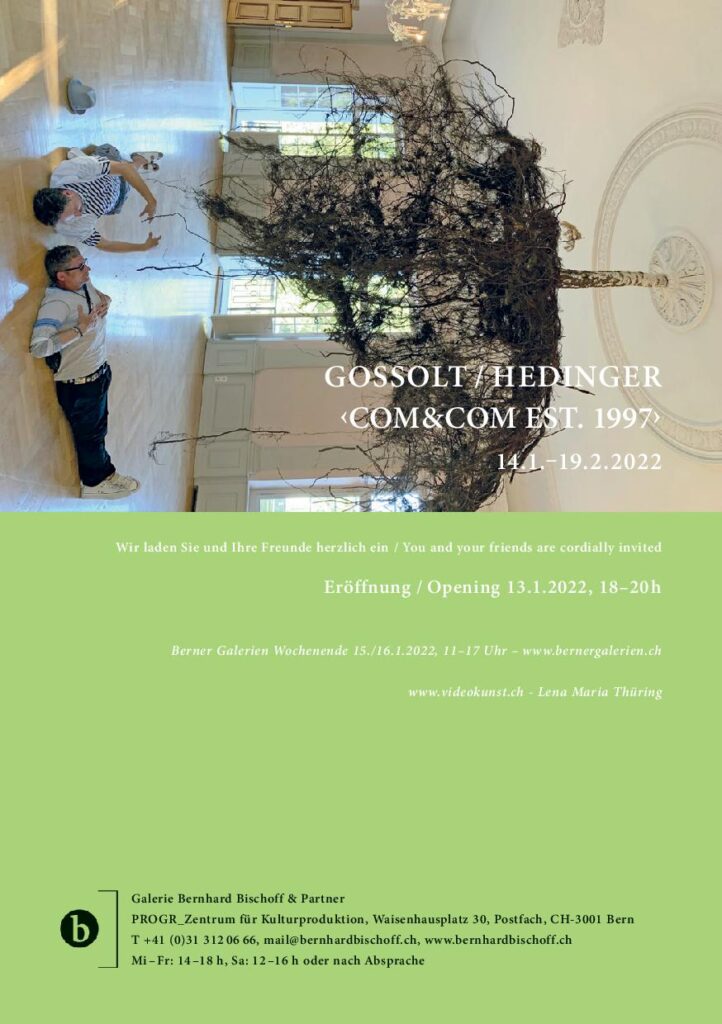
The Swiss artist duo Com & Com (Marcus Gossolt / Johannes M. Hedinger), founded in 1997, is showing a selection of works from all phases of their creativity as well as two completely newly developed groups of works for their 25th anniversary.
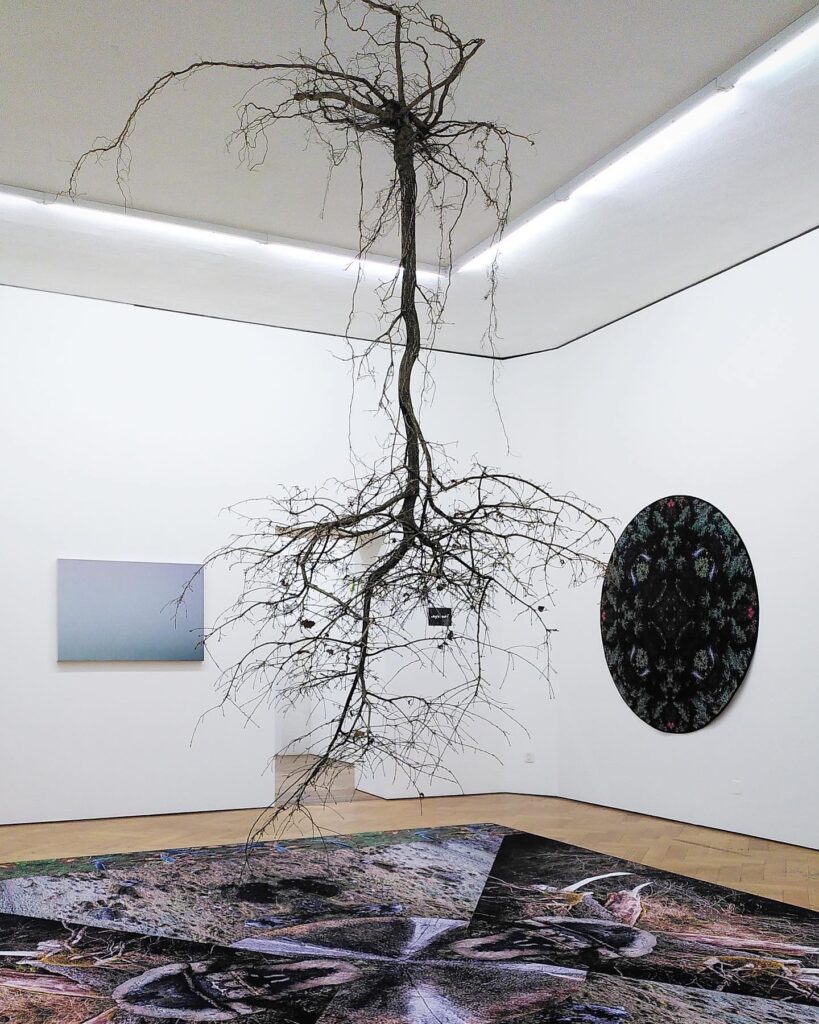
BAUM 4 (2022) is a new three-part tree work. Not only have Com & Com been traveling around the world with a tree trunk for over 10 years (Bloch, 2011-), since 2010 they have also dug up several trees and all their roots and staged them in art spaces as Natural Ready Mades. These filigree structures are astonishing again and again when they make visible what branched and complex cosmos opens up underground.
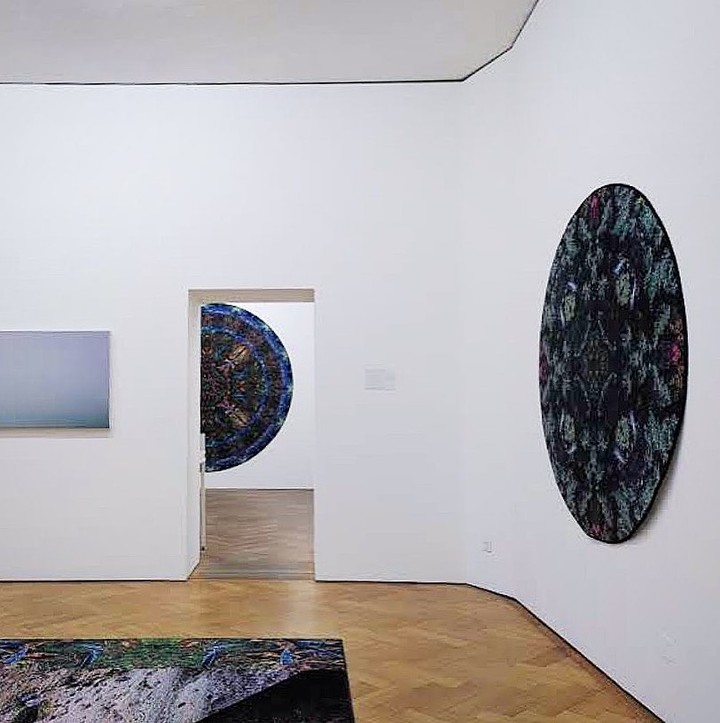
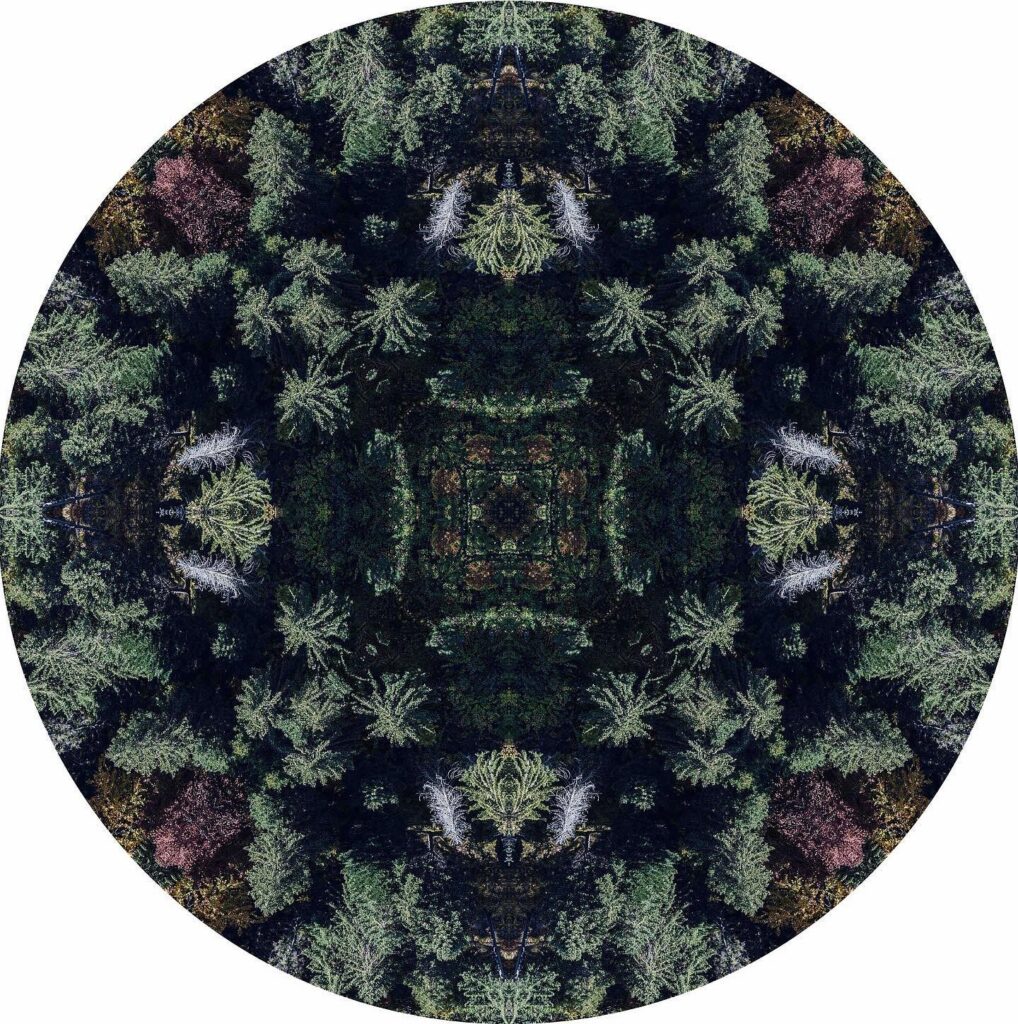
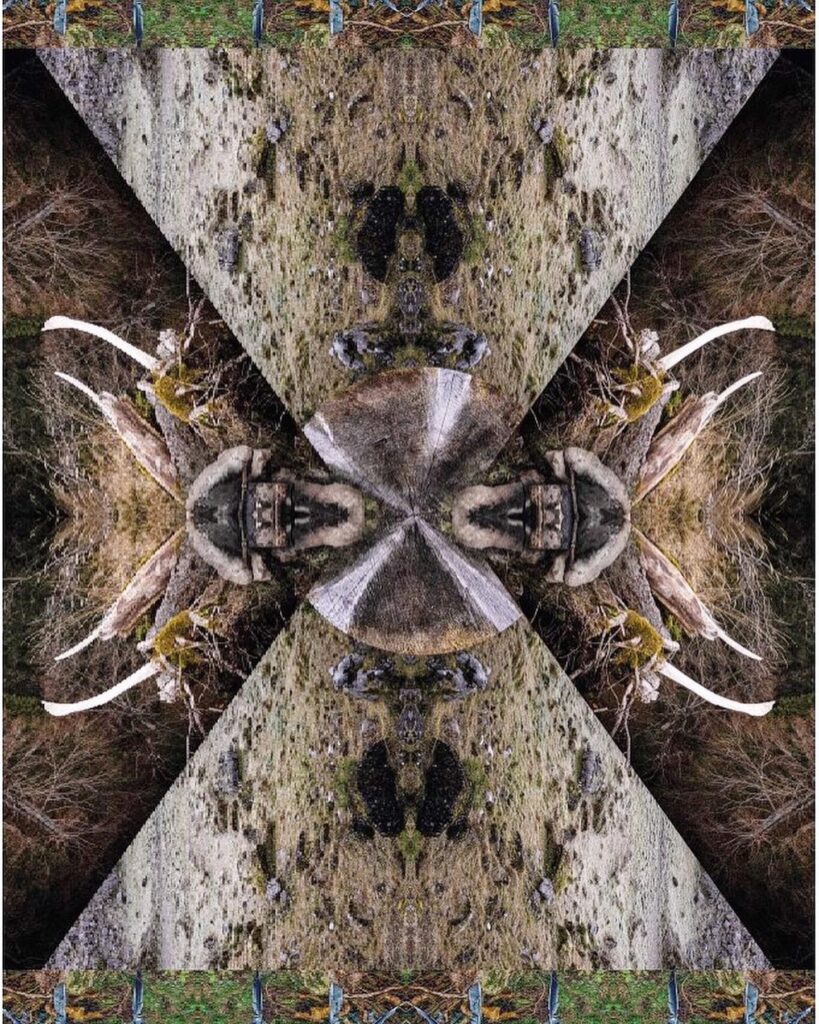
Opposite these hanging trees, WALD (2022) is a second new group of works made of carpets with forest motifs, which were developed in collaboration with Martin Leuthold, textile designer and former creative director of Jakob Schlaepfer (known for their haute couture and prêt- à Porter fabrics). There are beguiling photo mandalas and collages of forest floors with repetitively arranged elements of wood, leaves, grass, feathers and bones. The large-format photo carpets are mainly shown as floor works, smaller formats also on the wall.
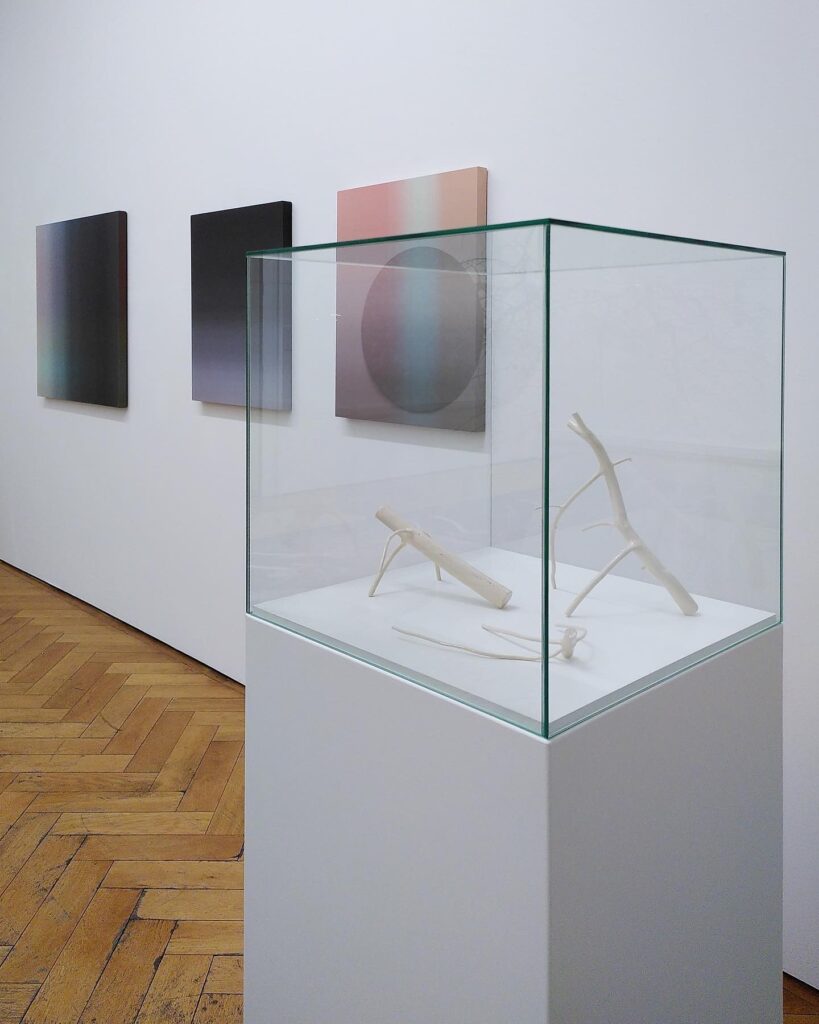
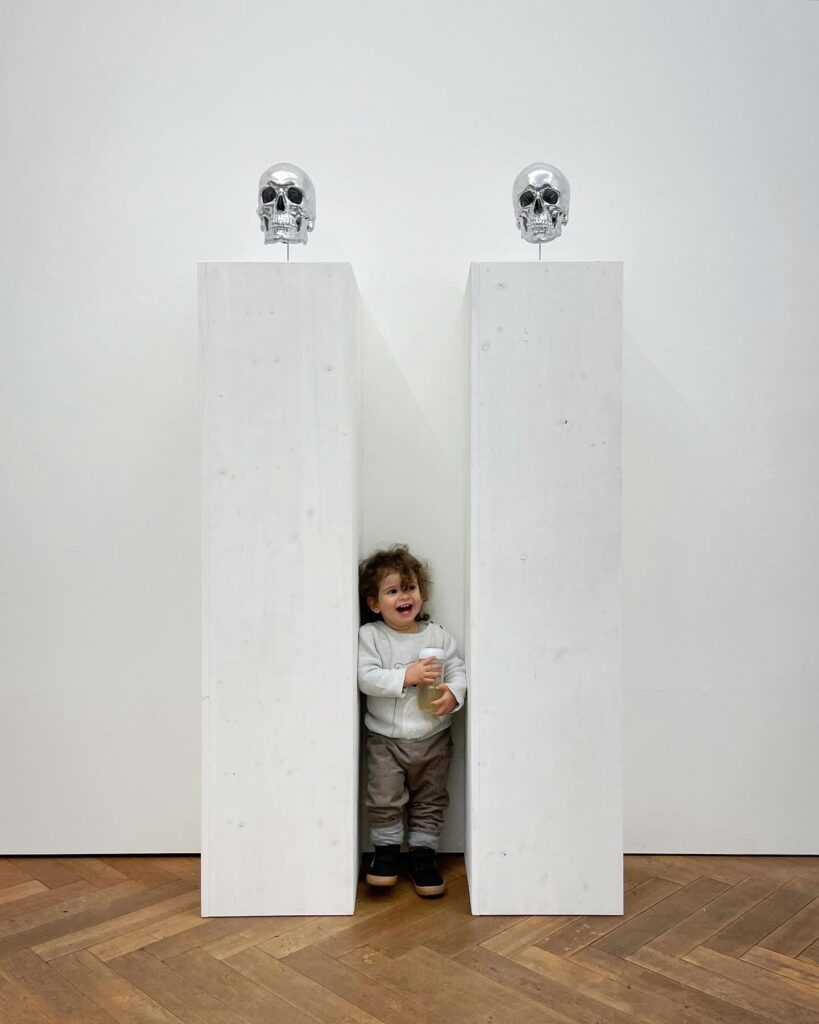
In the second room of the gallery, a small retrospective with 25 works – drawings, photos, graphics, paintings, objects and sculptures – from the last 25 years invites you to review the work of Com & Com and how it has changed over time. This overview is supplemented by a selection of videos and publications from three decades.
At the end of the year 2022, a sequel to Com & Com’s first catalog of works from 2010 (Lexicon of Contemporary Art) has been announced. This second part offers for the first time a complete overview of the oeuvre of the last 12 creative years as well as a selection of texts from the same period.
The anniversary exhibition is the eighth solo exhibition by the artist collective Com & Com, which has been represented by Galerie Bernhard Bischoff & Partner for 16 years.
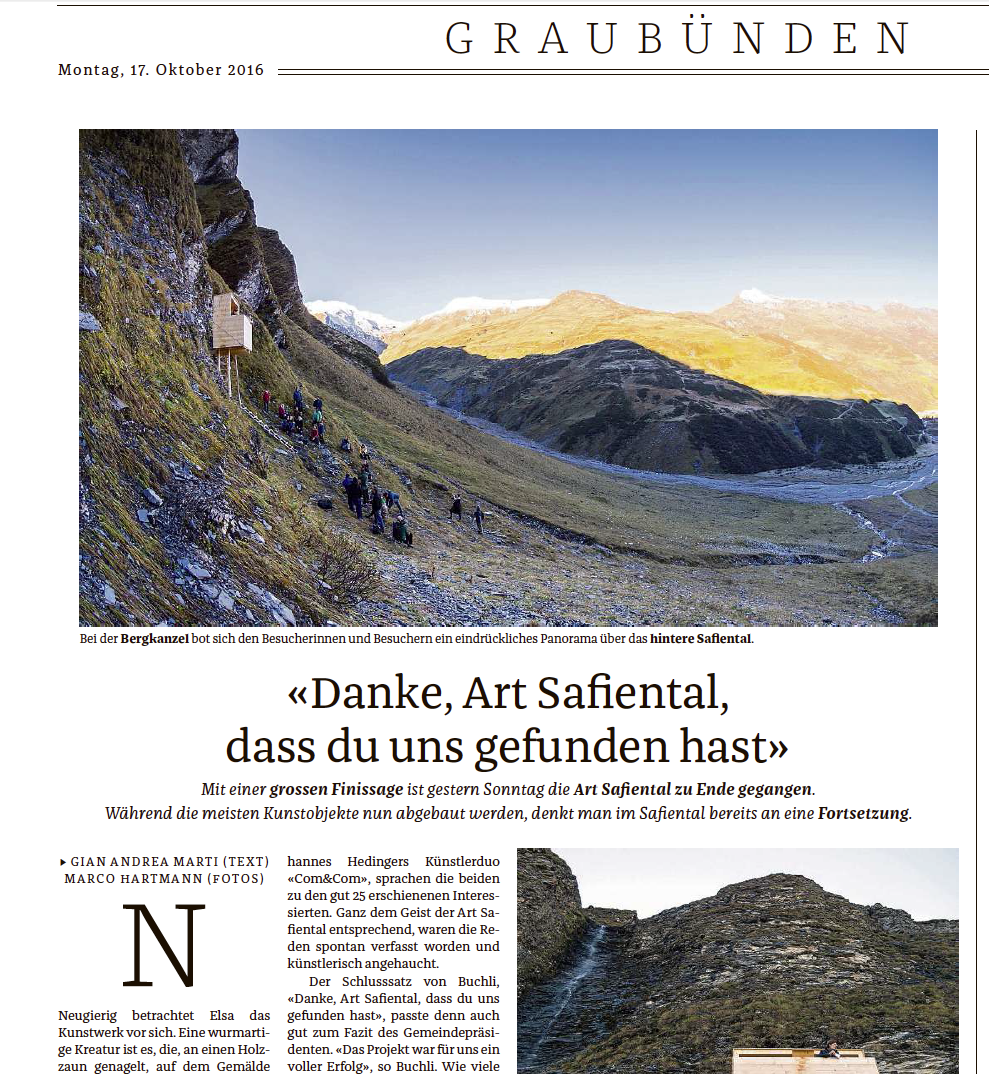
Bye-bye Bergkanzel
Last view on the Bergkanzel in the Report in Bünder Tagblatt on the Occasion of the finissage of Art Safiental Biennale. full article here
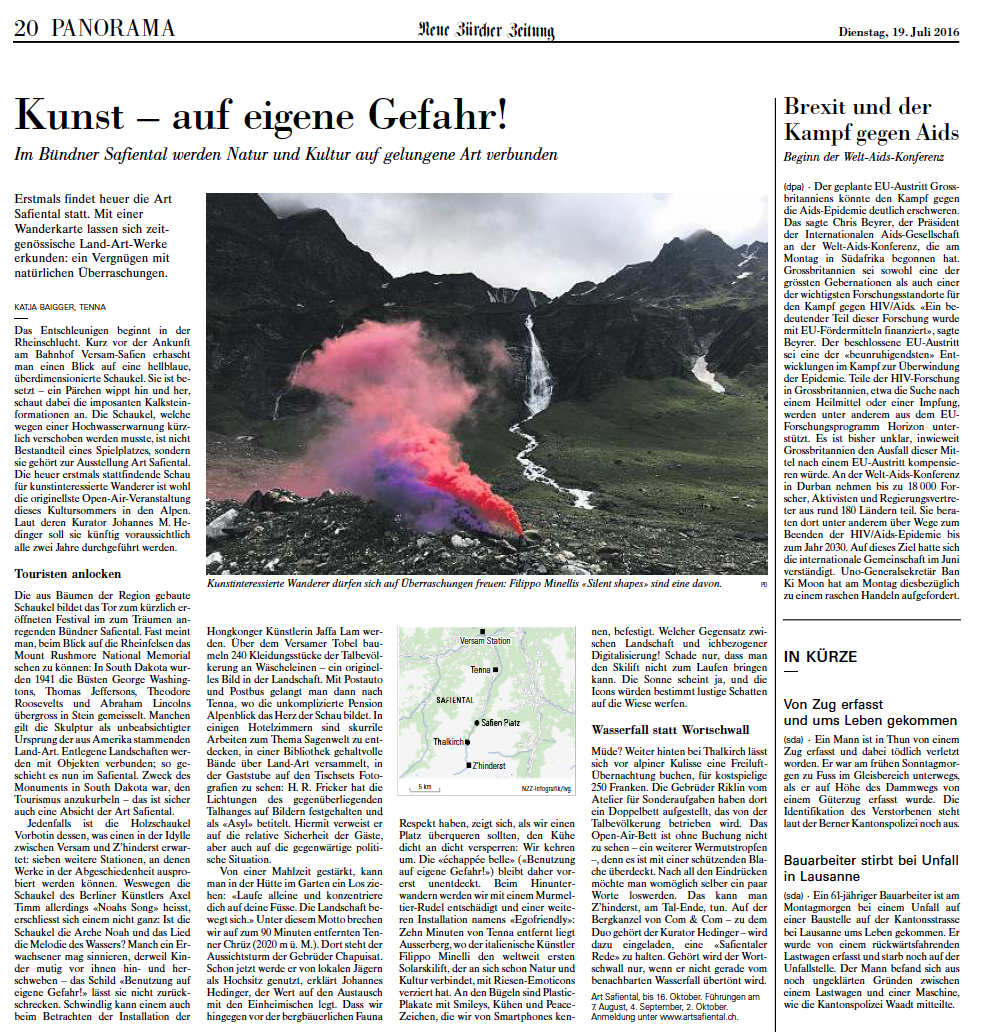
Bergkanzel in NZZ
Bergkanzel in Neue Zürcher Zeitung, page 20 – July 19, 2016, link online
Installation Bergkanzel
Installation of Bergkanzel (from min 1.03)
Marking of Bergkanzel
Preview on Bergkanzel, Art Safiental Biennale and Alps Art Academy in Bünder Tagblatt by Jano Felice Pajarola – download